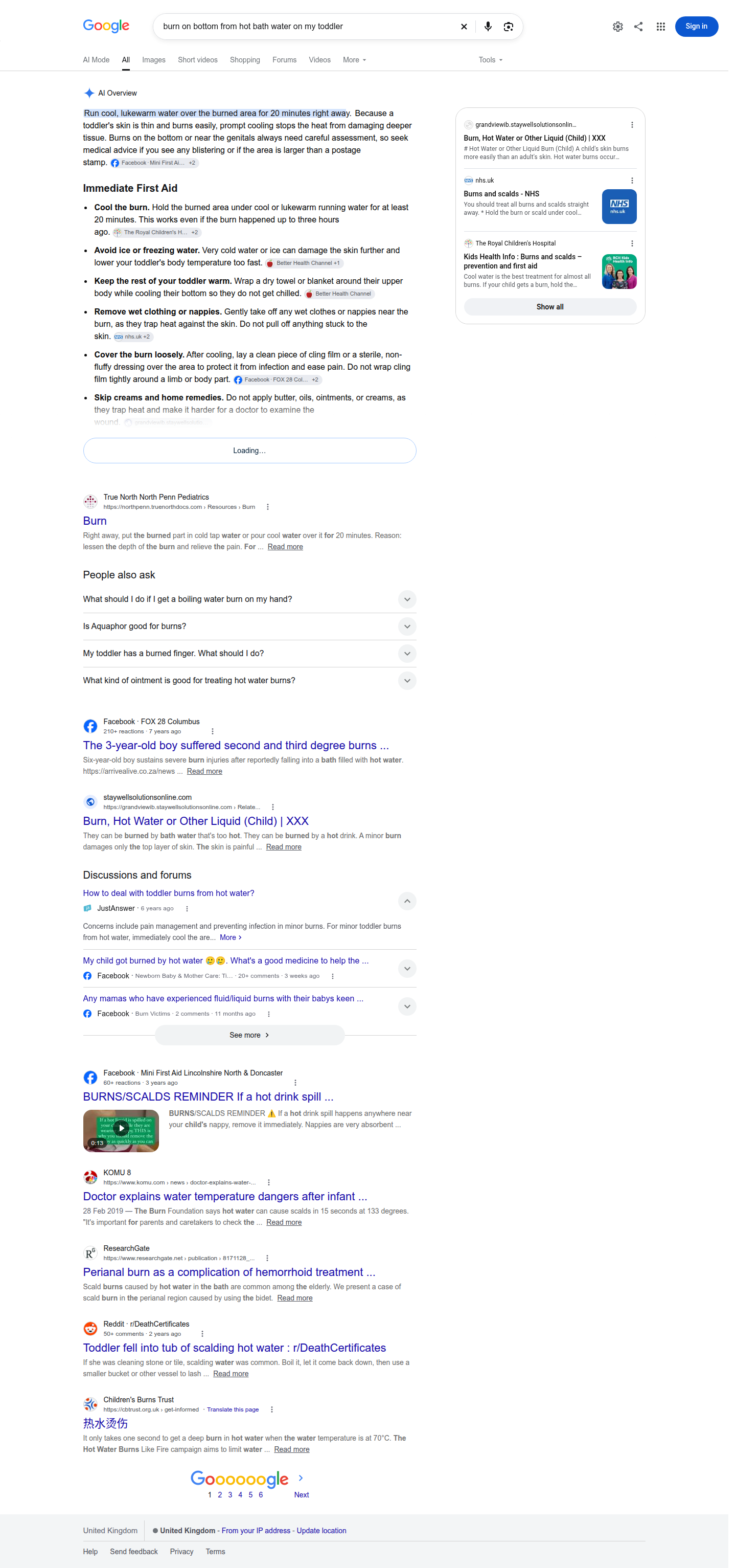
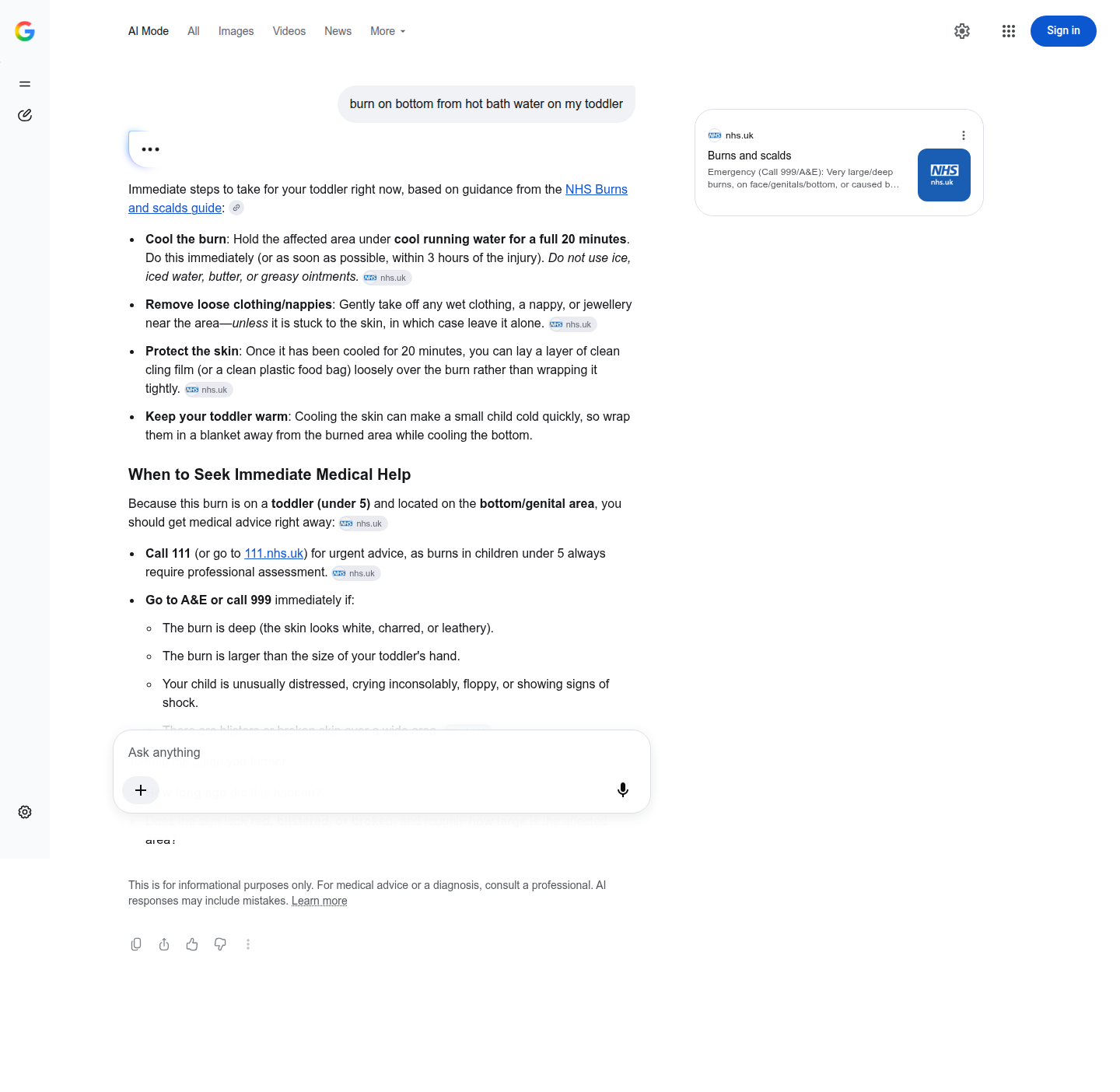
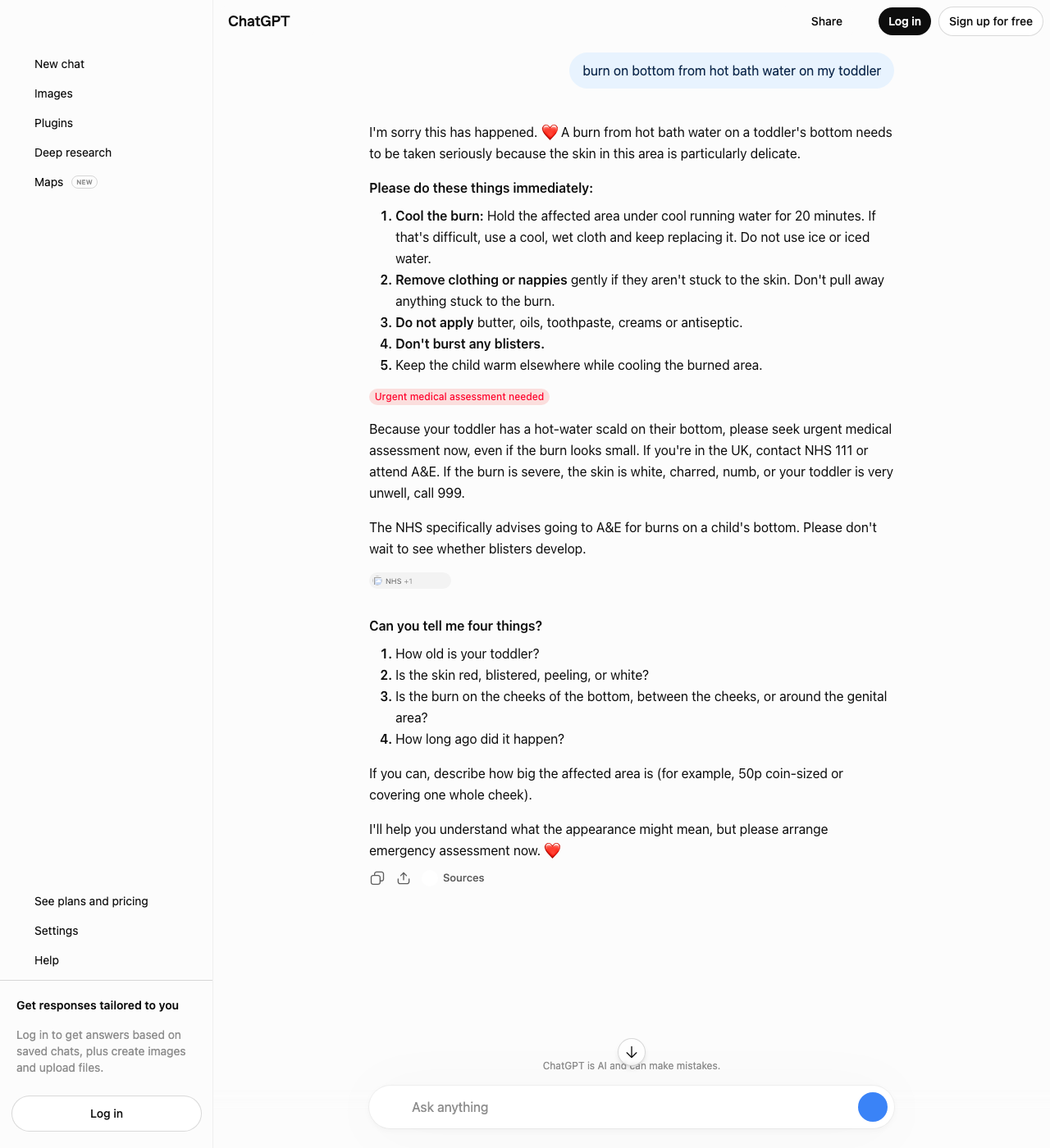
Run cool, lukewarm water over the burned area for 20 minutes right away. Because a toddler's skin is thin and burns easily, prompt cooling stops the heat from damaging deeper tissue. Burns on the bottom or near the genitals always need careful assessment, so seek medical advice if you see any blistering or if the area is larger than a postage stamp.123
Immediate First Aid
- Cool the burn. Hold the burned area under cool or lukewarm running water for at least 20 minutes. This works even if the burn happened up to three hours ago.123
- Avoid ice or freezing water. Very cold water or ice can damage the skin further and lower your toddler's body temperature too fast.12
- Keep the rest of your toddler warm. Wrap a dry towel or blanket around their upper body while cooling their bottom so they do not get chilled.1
- Remove wet clothing or nappies. Gently take off any wet clothes or nappies near the burn, as they trap heat against the skin. Do not pull off anything stuck to the skin.123
- Cover the burn loosely. After cooling, lay a clean piece of cling film or a sterile, non-fluffy dressing over the area to protect it from infection and ease pain. Do not wrap cling film tightly around a limb or body part.123
- Skip creams and home remedies. Do not apply butter, oils, ointments, or creams, as they trap heat and make it harder for a doctor to examine the wound.1
When to Seek Urgent Medical Care
According to NHS burns and scalds guidance, you should go to A&E or an urgent treatment centre immediately if you notice any of the following:1
- Blisters or broken skin. Any burn that blisters, peels, or looks white, charred, or leathery needs urgent medical evaluation.
- Involvement of sensitive areas. Burns affecting the genitals, perineum, face, hands, or feet always require prompt medical care.
- Large burn size. Seek emergency care if the burned area is larger than the size of your toddler's hand.
- Signs of shock or severe distress. Seek help immediately if your toddler is unusually drowsy, pale, cold and clammy, or in severe pain that does not settle.123
Caring for a Mild Red Burn at Home
If the skin is only slightly pink or red without any blisters, covers a small patch, and does not involve the genitals, you can manage it at home after cooling.12
- Give children's pain relief. You can use an age-appropriate dose of children's paracetamol or ibuprofen to keep them comfortable.
- Leave small, closed blisters alone. If a tiny blister forms later, do not pop it, as intact skin protects against germs.
- Watch for infection. Call NHS 111 or your GP if you notice spreading redness, increased swelling, pus, a bad smell, or if your toddler develops a fever.1234
Learn more If you'd like to share a bit more detail, let me know:
- Whether the skin is just red or has blisters or peeling
- Roughly how big the burned area is
- Whether the burn reaches the genitals or creases
I can help you decide whether this needs an urgent trip to A&E or can be safely monitored at home.