13 November 2026
1 of 3
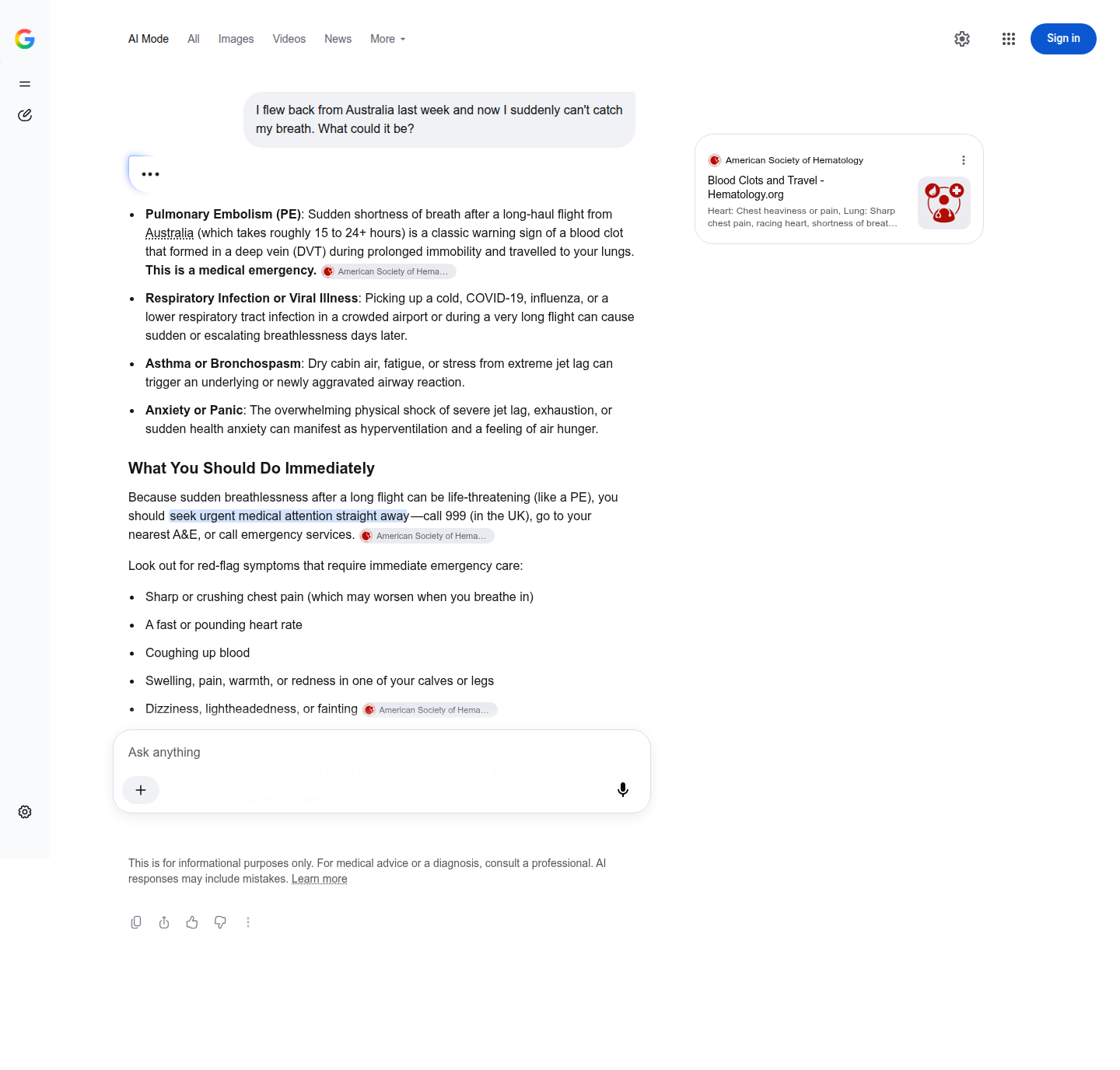
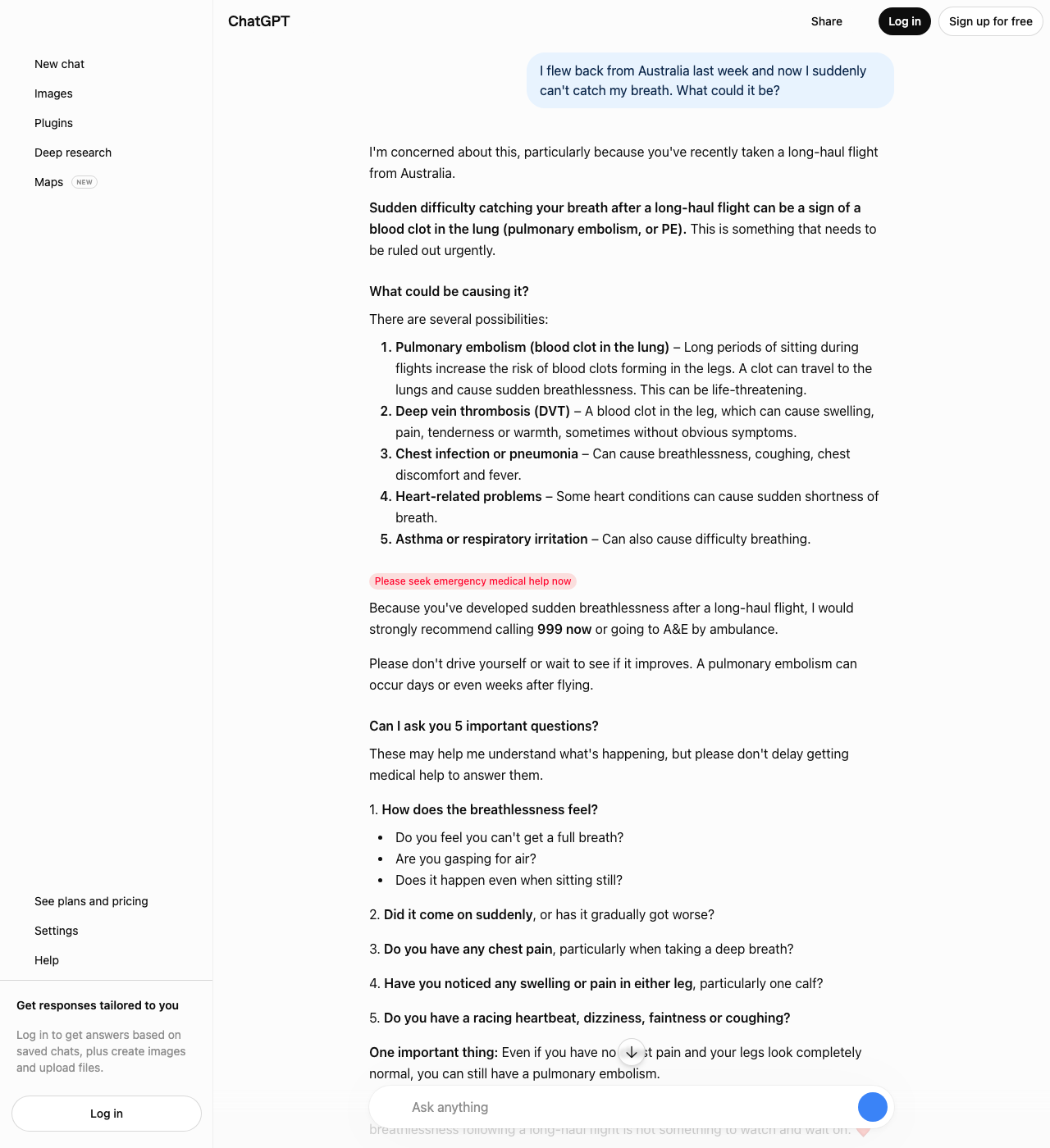
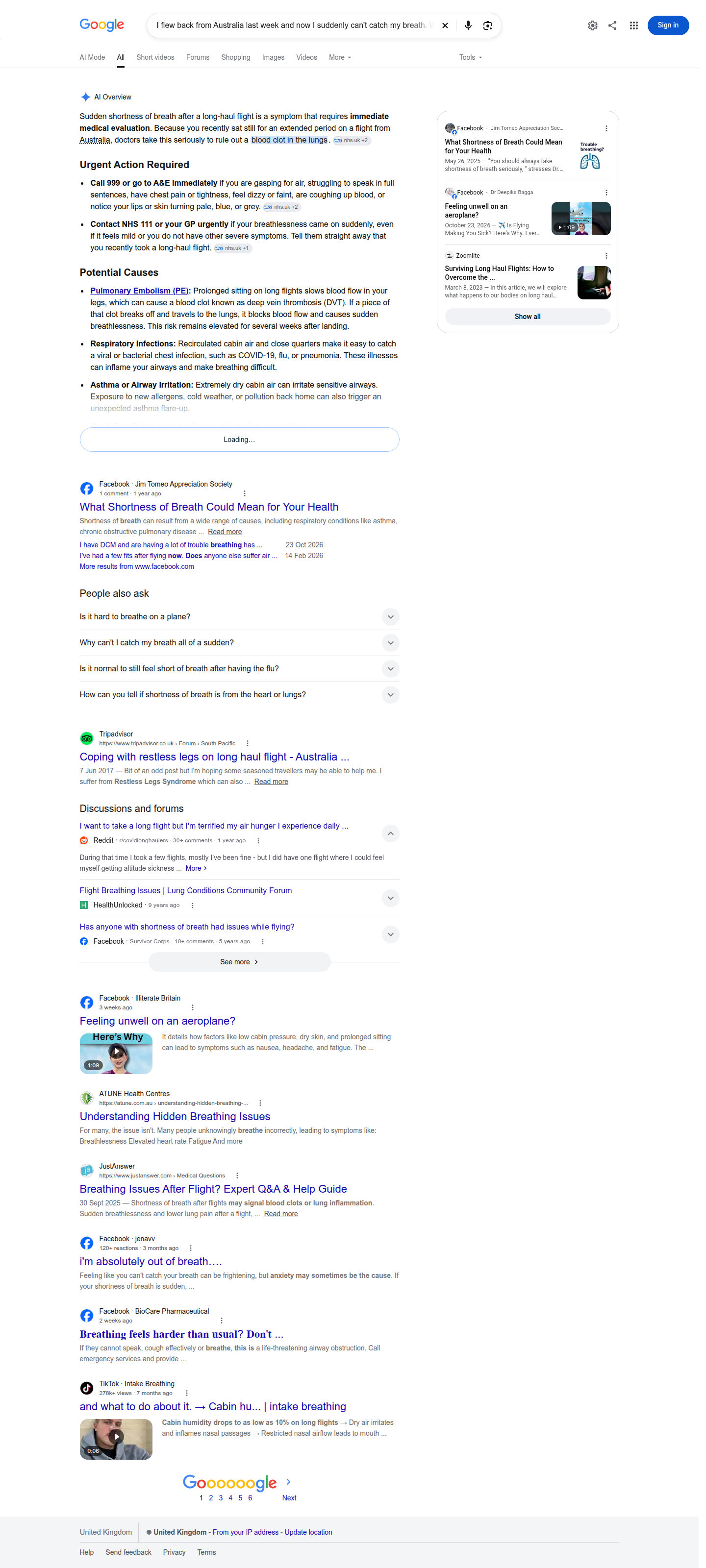
Sudden shortness of breath after a long-haul flight is a symptom that requires immediate medical evaluation. Because you recently sat still for an extended period on a flight from Australia, doctors take this seriously to rule out a blood clot in the lungs.123
Urgent Action Required
- Call 999 or go to A&E immediately if you are gasping for air, struggling to speak in full sentences, have chest pain or tightness, feel dizzy or faint, are coughing up blood, or notice your lips or skin turning pale, blue, or grey.123
- Contact NHS 111 or your GP urgently if your breathlessness came on suddenly, even if it feels mild or you do not have other severe symptoms. Tell them straight away that you recently took a long-haul flight.12
Potential Causes
- Pulmonary Embolism (PE): Prolonged sitting on long flights slows blood flow in your legs, which can cause a blood clot known as deep vein thrombosis (DVT). If a piece of that clot breaks off and travels to the lungs, it blocks blood flow and causes sudden breathlessness. This risk remains elevated for several weeks after landing.
- Respiratory Infections: Recirculated cabin air and close quarters make it easy to catch a viral or bacterial chest infection, such as COVID-19, flu, or pneumonia. These illnesses can inflame your airways and make breathing difficult.
- Asthma or Airway Irritation: Extremely dry cabin air can irritate sensitive airways. Exposure to new allergens, cold weather, or pollution back home can also trigger an unexpected asthma flare-up.
- Heart Conditions: Long-haul travel, dehydration, and shifts in cabin pressure can occasionally trigger an irregular heartbeat (arrhythmia) or put extra strain on the heart, leading to sudden breathlessness.
- Anxiety or Panic Attacks: Severe jet lag, exhaustion, and post-travel stress can trigger hyperventilation and a sudden feeling that you cannot get enough air. However, doctors always rule out physical causes like a blood clot first.12345678910
What to Watch For
While waiting to be assessed by a medical professional, take note of any accompanying signs to share with the doctor:
- Leg symptoms: Pain, tenderness, swelling, warmth, or redness in one leg, especially in the calf.
- Chest symptoms: Sharp chest pain that gets worse when you take a deep breath or cough.
- Heart rate: A racing, pounding, or fluttering heartbeat.
- Infection signs: A new fever, chills, sore throat, or a cough producing phlegm.123456
Learn more Are you currently having any other symptoms like chest pain, leg swelling, or a cough? Knowing this—along with whether you feel safe to seek urgent medical care right now—can help me give you more relevant information.
The page as it was capturedOpen the full image